Stray Kids Make Rock in Rio History as K-pop Takes Over the Main Stage for the First Time
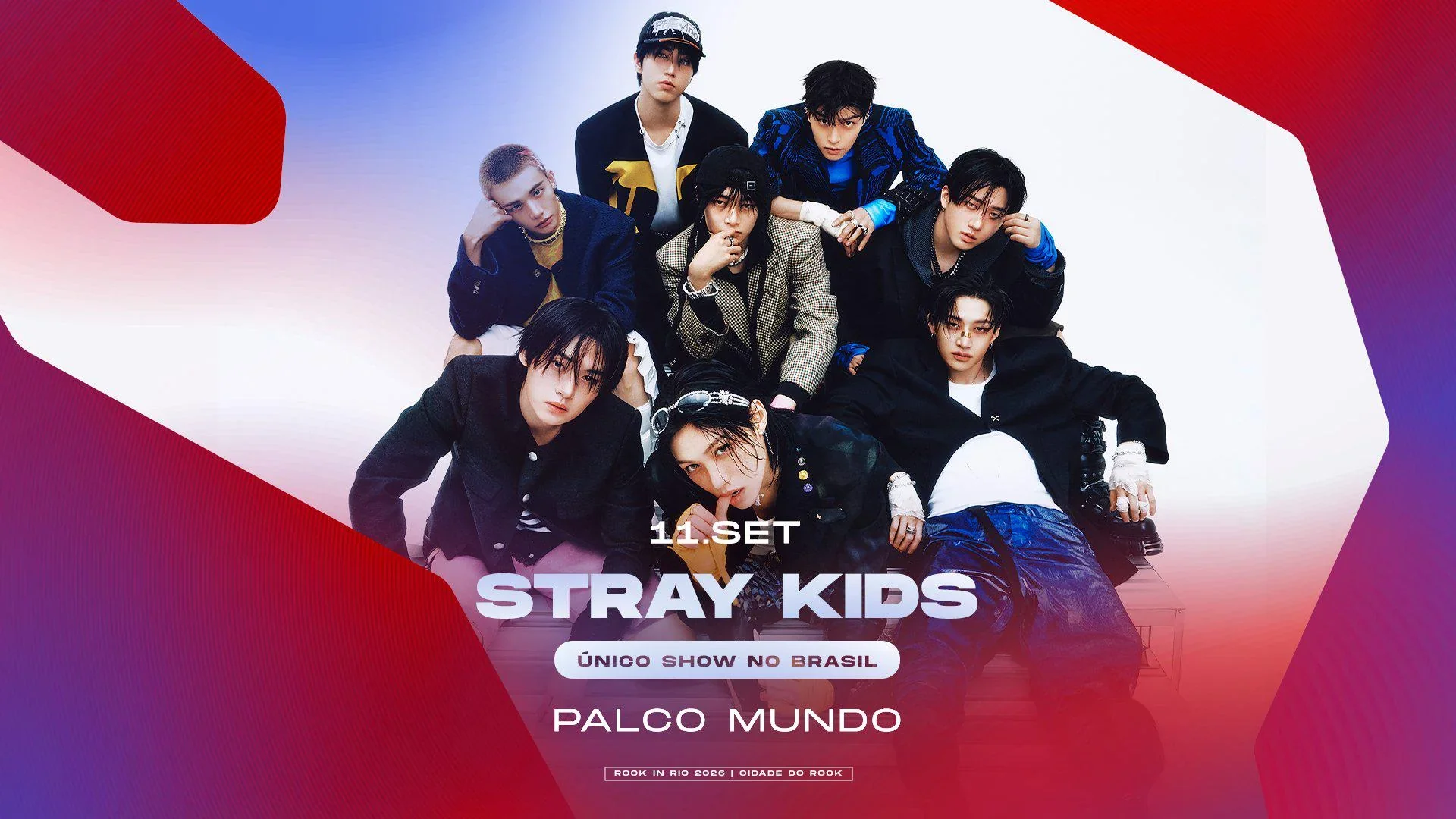
Stray Kids headline Rock in Rio tonight as the festival dedicates its Palco Mundo lineup to a K-pop-heavy bill featuring HWASA and NEXZ.
K-pop is officially taking over one of the biggest festival stages in the world.
Tonight, September 11, Stray Kids will headline Rock in Rio 2026, becoming the first K-pop act to headline the legendary Brazilian festival. Even bigger, the entire Palco Mundo lineup leans heavily into Asian music, with NEXZ opening the stage and HWASA performing before Brazilian DJ Alok and Stray Kids close out the night.
For a festival that launched in 1985 and has built its reputation around artists like Queen, Guns N’ Roses, Metallica, Red Hot Chili Peppers and countless other global acts, this is a pretty major shift.
Stray Kids were announced as Rock in Rio’s first K-pop headliner back in November 2025, but tonight is when that milestone actually becomes real. The group performs on the festival’s main stage, Palco Mundo, at Cidade do Rock in Rio de Janeiro.
And they are not coming alone.
NEXZ, the Japanese-Korean boy group formed through Nizi Project Season 2, kicks off the Palco Mundo lineup. The group has built its career between both Korea and Japan, making its inclusion an especially interesting fit for a night that is essentially showing just how wide the Asian pop audience has become.
Then there is HWASA.
The MAMAMOO member and soloist also makes history tonight as the first female K-pop soloist to perform at Rock in Rio. She arrives at the festival following a strong solo run that includes “Good Goodbye” and this year’s “So Cute,” bringing a very different kind of stage presence compared with both NEXZ and Stray Kids.
That variety is what makes the night more interesting than simply saying Rock in Rio booked a K-pop act.
NEXZ represents a newer generation with roots across Japan and Korea. HWASA brings one of K-pop’s most recognizable solo performers. Stray Kids arrive as one of the biggest touring groups in the world.
Together, they turn September 11 into something closer to a statement about where global festival culture is heading.
Stray Kids already know what huge international festival stages feel like.
The group has previously performed at events including Lollapalooza Paris, Lollapalooza Chicago and BST Hyde Park, while also building a touring footprint that now includes major stadium shows around the world.
Brazil has become a particularly important market for the group.
During their previous run in the country, Stray Kids drew huge crowds across multiple stadium shows, reinforcing just how strong K-pop fandom has become in Latin America. Rock in Rio now takes that existing audience and places it directly in the middle of one of Brazil’s biggest mainstream music festivals.
The festival is clearly acknowledging that shift too.
Recent Brazilian coverage has highlighted that lightsticks are being allowed into the festival for the K-pop-focused day, something that feels small on paper but actually matters culturally. Lightsticks are a huge part of the live K-pop experience, and letting fans bring that tradition into Rock in Rio makes tonight feel less like K-pop being squeezed into someone else’s festival and more like the festival adapting to the audience coming through the gates.
Rock in Rio’s official schedule confirms Stray Kids, Alok, HWASA and NEXZ as the four Palco Mundo acts for September 11. The wider festival lineup tonight also includes Jamiroquai and PJ Morton on the Palco Sunset, along with artists spread across several additional stages.
But from an Asian music perspective, the main stage is the story.
For decades, major Western festivals treated K-pop as something separate from the mainstream festival circuit.
Tonight, Rock in Rio is doing the opposite.
One of its biggest stages is opening with a Japanese-Korean group, bringing out one of Korea’s biggest female soloists, and ending with eight members of Stray Kids standing where some of the most famous bands in the world have stood before them.
That is a pretty clear sign of how much the live music landscape has changed.
